
Spartans, Wagecucks and Entrepreneurs: Ethnographic Insights into a Manosphere Leadership Retreat
Based on ethnographic work conducted at a men-only leadership retreat in Greece, this article examines how the manosphere turns masculine self-improvement into a political and social project. It shows how participants fashion themselves in relation to desirable and undesirable masculine figures and how this process becomes entangled with anti-feminist politics. Moreover, the retreat offers not only a pedagogical space, but also an alternative social infrastructure which supports men’s career ambitions and political aspirations.
Manosphere Leadership Retreat
A good orator is a good man speaking well, as the Romans said. Rhetoric is one of the most important virtues of the Western man. To speak publicly is Western man’s self-improvement and we improve ourselves to participate in the public affairs of the state and to pursue virtue. Here, we will learn how to be a persuasive man and a public man and we will forge a common culture of being a men’s order, like the Spartan hoplites.
This address was delivered to about twenty white cisgender men - most of them in their early thirties - in a hotel conference room in central Athens, Greece. They had travelled there for a “Men-Only Ancient Leadership Retreat” that promised “tactics of persuasion and strategies of powerful oratory”, memorable experiences, and an expanded network for “projects of joint action.” I attended as an anthropologist researching the manosphere: a diffuse network of predominantly male communities that spans digital and physical spaces and educates a transnational audience in physical, intellectual, and moral self-cultivation. Yet this seemingly harmless self-improvement rhetoric is often animated by a conspiratorial narrative of misandry that casts mainstream institutions as hostile to men and links self-betterment to reactionary anti-feminist and anti-egalitarian politics. The retreat offered a rare opportunity to observe how such ideas are taught and embodied through pedagogy, performance, and male sociality rather than through online talk alone. Over ten days, I participated in all retreat activities alongside an international cohort from the United States and Western Europe, observing and conducting interviews. Our guide, teacher, and organizer – whom I call Michael – was a U.S. influencer and former academic with a PhD in Classics.[i] He explained to me that his mission is to inspire men by retelling biographies of Greek and Roman statesmen on his podcast and extracting lessons for the present. This article offers a glimpse into the educational and socializing practices of the offline manosphere and explores how the participants conceptualize masculinity by constructing and relating to a set of desirable and despised masculine figures.
Education and Performative Excellence
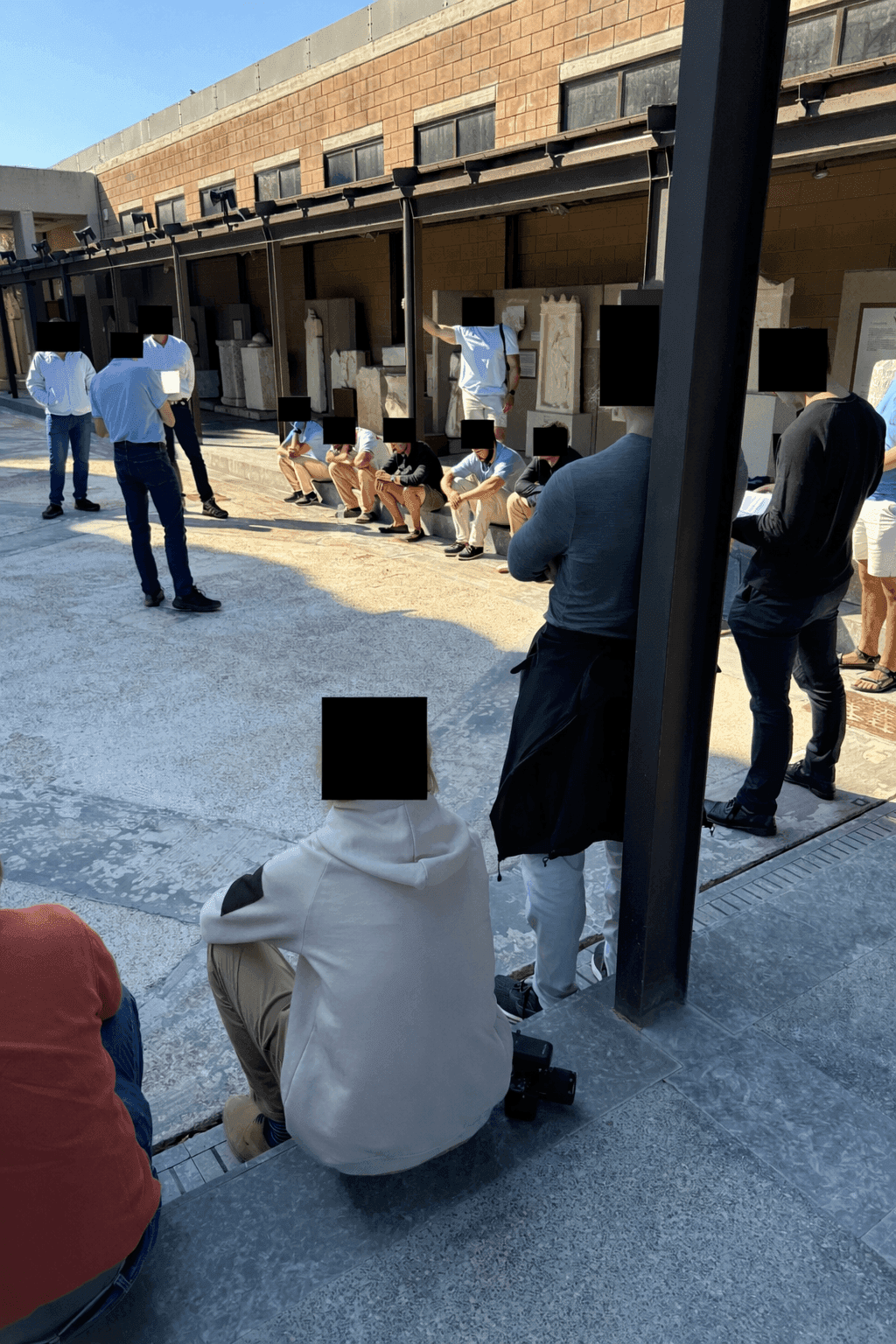
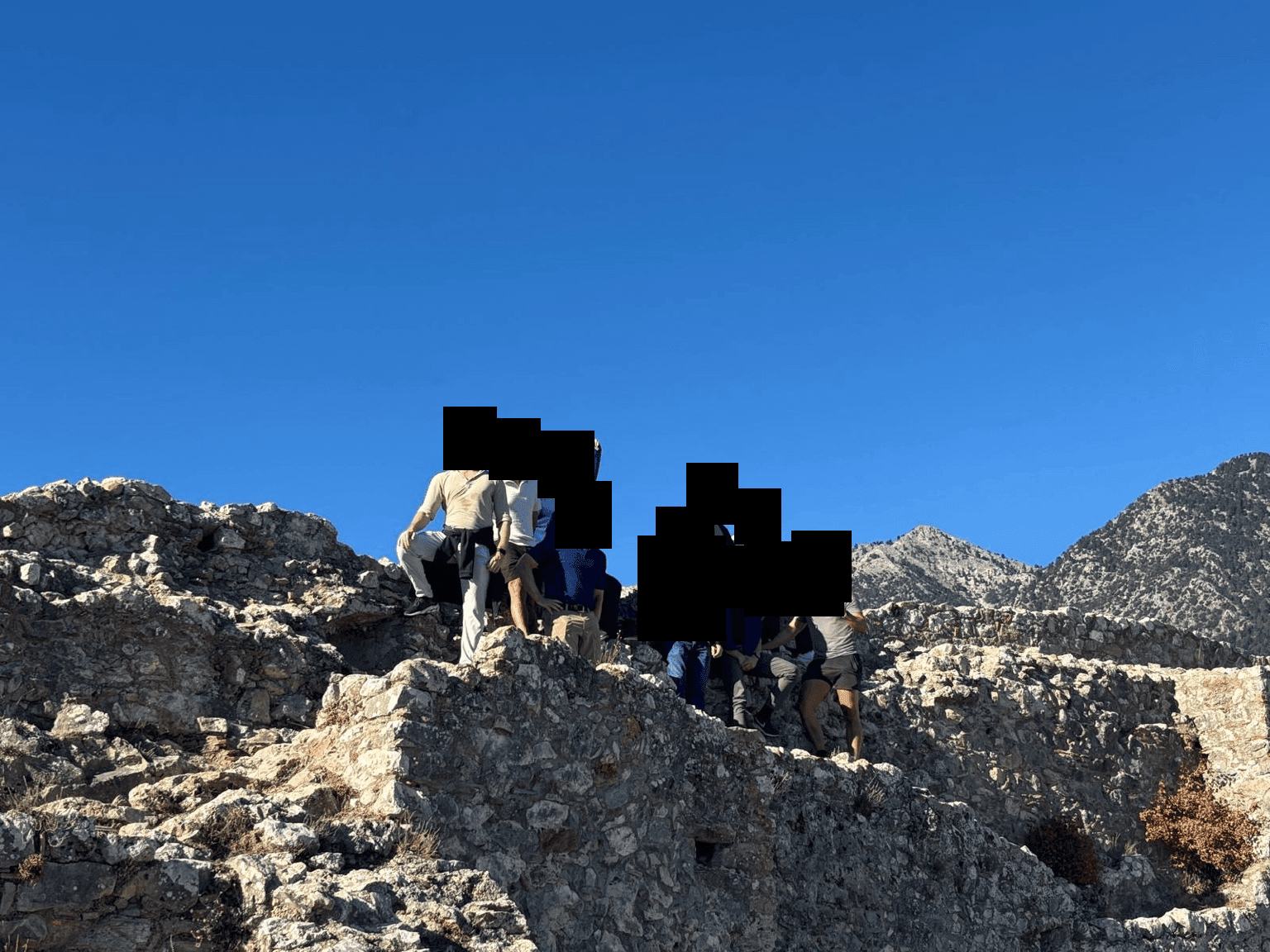
The retreat’s educational activities included impromptu speeches, readings from ancient Greek texts, hikes among ruins, visits to archaeological sites and museums, and, most importantly, debates. The debates were based on episodes of Michael’s podcast about the Peloponnesian War. Participants impersonated ancient statesmen and military commanders and debated key strategic decisions, such as Spartan and Athenian political or military strategy. Performed in English, these debates were marked by elevated vocabulary, pathos, and emphatic gesture. Winners were chosen by judges. Afterwards, organizers offered feedback on both argument and embodiment: the logic of premises, the structure of claims, and the “projection of confidence.” Michael taught the three classical appeals – ethos, logos, and pathos – and stressed the role of the body in projecting strength, confidence, and vitality, which he described as “core virtues of a good man.”
The retreat thus provided a pedagogy of public masculine presence. Following Herzfeld, I interpret this as the cultivation of masculine performative excellence: the ability to foreground manhood through deeds that “speak for themselves”.[ii] Masculinity is thus not something inborn, but something that one demonstrates by conforming to a set of normative ideals. In the retreat, this excellence consisted in a loud, steady voice, the projection of strength and authority, and the capacity to dominate competitive public space.
A Masculine Space in a “Feminized World”
The cultivation of this masculine performative excellence was not apolitical. Participants and organizers understood assertiveness, confidence, and competitiveness as part of an anti-feminist political project and as an antidote to a perceived cultural decline of their societies. Paradoxically, many participants insisted that the skills cultivated at the retreat were neither applicable nor rewarded in the outside world, especially in their workplaces. Martin, a 27-year-old sales employee from the UK, described his office as a space where men “mumble,” where one is “forced to speak softly,” and where “women turn every office into kindergarten with corporate therapy-speak.” Variations of this complaint were voiced by almost everyone present.
Participants drew heavily on the folk evolutionary psychology of sex difference that circulates in the manosphere. They repeatedly cited various claims, such as that “women favor consensus over confrontation” and that modern institutions “privilege the feminine over the masculine: empathy over rationality, safety over risk, cohesion over competition.” Such claims seemed plausible to the participants in the context of their own careers: most of them were college-educated men in their late twenties or early thirties working in entry-level jobs in marketing, sales, or IT. They explained their mostly economic grievances, precarious employment in their positions, stalled careers, lack of influence in corporate hierarchy as the result of a “great feminization” that has banished their valorized masculine excellence, aggression and competitiveness, from workplaces. In doing so, they created a conspiratorial narrative of cultural and moral decline that spans both the US and Europe. The retreat was therefore more than vocational training. It was imagined as an alternative arena in which these capacities could still be recognized by fellow men outside the institutions they despised.
Who Are The “Fellow Men”? Boundary Making and Transgression as a Masculine Virtue
The community of “fellow men” who could recognize and value this cultivated masculine excellence was produced especially in informal conversation and through transgressive humour. On the second day, Michael read aloud suggested contemporary debate topics and then, in a playful tone, proposed debating “depriving women and homosexuals of the right to vote in the spirit of Aristotle.” The suggestions elicited a wave of hysterical laughter from the participants who seemed overjoyed with the transgression. Commenting on this, Andrew, an American in his early thirties, responsible for retreat logistics, told me:
It’s just guys being guys. Hanging out with guys for a week is fun because you speak to your fellow men who understand you. We, of course, preselect who gets to come, but the guys who decide to come are mostly based, right-leaning. And if we had women or libs there, it would spoil all the fun. Everyone would watch their tongue. We don’t have to agree on everything politically, but you should be able to take a joke without speech policing or moralizing. Those are just jokes. It’s just guys being over the top to bond. It’s just nice to be among guys who are not low T [low testosterone; RO], with whom you can finally say everything, away from your normie job and HR [Human Resources; RO]. (laughs)
Michael’s delivery and Andrew’s gloss illustrate how offline manosphere humour mirrors what Sloan describes as “irony poisoning” in alt-right spaces online. The misogynistic, homophobic anti-egalitarian comment hovered ambiguously between an earnest proposition and a provocative joke. That ambiguity allowed participants to enjoy the transgression of social norms while also ironically distancing themselves from it. As Sloan notes for online contexts, ironic distancing can enable users to gradually drift toward positions that first appeared merely jocular.[iii]
More importantly, humour functioned as participatory boundary work. Being “in” on the joke marked belonging; discomfort signalled outsider status. In studies of digital far-right and adjacent online milieus, Gal[iv] and Burnett[v] show how transgressive humour establishes group norms through ridicule and exclusion. The retreat reproduced a similar dynamic offline by excluding cisgender women, queer people, and liberal men imagined as overly moralizing. This boundary work also organized two opposed masculine archetypes. On one side stood the “based” man: high-testosterone, competitive, openly reactionary or at least comfortable with violating norms of egalitarianism. On the other stood the “normie”: the feminized liberal man with “low testosterone”, imagined as consensus-seeking, cautious, and aligned with women through moral policing. In participants’ talk, transgression thus became a masculine virtue, a part of the valorized performative excellence. The retreat appeared as a temporary utopia in which “real masculinity” could be performed among “fellow men,” away from allegedly feminized institutions.
Exemplars of Greatness: From Spartans to Entrepreneurs
The retreat did not merely diagnose loss, it also offered remedies. Michael’s role was twofold. First, he functioned as a moral exemplar. Participants pointed to his imposing stature, confident voice, and apparently patriarchal family biography – married, with a stay-at-home wife and three children – as signs of authority. He also highlighted his own physical prowess by doing ten push-ups for every minute he was late to class. He described his departure from academia as a refusal of feminization: he had turned down a tenure-track post because universities, he claimed, increasingly rewarded softness and conformity, making “real classical education” impossible.
Second, Michael acted as a translator between ancient heroism and contemporary aspiration. Standing before the ruins of the Spartan agora, he drew a lesson from the life of Lysander: “Sometimes you have to act in accordance with your character – your masculine ethos – without endless deliberation. When you’re thinking ‘maybe I should wait until that check clears’ or ‘is this too risky’, you just do what you know you need to do: quit that job, start the business, invest in the new idea. You can still pursue greatness, you can just do things.”
Across the retreat and Michael’s podcast, the figure of the ancient warrior-statesman was linked to the contemporary entrepreneur, investor, or venture capitalist. The point of continuity lay in decisiveness, competitiveness, ambition, and risk-taking. Scholars of entrepreneurship have long noted that the entrepreneur is often narrated as a heroic “great man” who conquers frontiers, opens markets, and founds new worlds.[vi] In the retreat, this script bridged antiquity and the present. When I asked Vincent, a 32-year-old German computer engineer, whether ancient greatness was still possible today, he pointed to his pantheon of modern heroes: “Elon Musk, Donald Trump, Peter Thiel, these are men of power… men of action… Faustian men.” And even other retreat participants who are successful entrepreneurs and don’t have to put up with the “modern feminized work culture” served as moral exemplars for Vincent. What united the contemporary entrepreneurs and the ancient warrior-statesmen in the imagination of the retreat participants, was the capacity to “do things”: to act without constraint, to withstand sanction, and to pursue both personal success and (reactionary) political projects.
Transnational Men’s Order
The retreat offered not only romanticized entrepreneurial aspiration, but also a practical support network. Once masculinity was imagined as threatened by mainstream institutions, “exit” became a moral solution. As Vincent put it: “I’ve been in the sphere long enough and I know enough great guys. If I got cancelled now and lost my normie wagecuck job, I would be able to find a job in a based company or start one with someone, in the US or somewhere. As Trump said: fight, fight, fight!”. The “men’s order” created at the retreat was therefore more than symbolic. It was a transnational support structure for aspiring entrepreneurs, offering networking opportunities, security against job loss, and routes out of institutions participants experienced as feminized. At the same time, it fed the ambition to build parallel institutions – commercial, educational, and political – where “real” masculinity, defined by competition, risk, and transgression, could flourish like in the retreat.
Vincent’s comment also illustrates two final opposing masculine figures that the retreat participants related to. On the one hand stood the conqueror-entrepreneur, the ideal man: autonomous, mobile, transgressive, and unafraid of institutional sanction. On the other stood the despised “wagecuck,” a salaried employee, dependent on feminizing wage labour and obedient to the rules of his “normie” workplace and society at large.
Conclusion
Seen from within, the retreat worked on three levels. First, it functioned as an alternative training ground for masculine performative excellence: assertive speech, competitive display, embodied confidence, and a readiness to transgress societal norms. These capacities were taught formally through debates and coaching and reinforced informally through socializing and competing. Second, it provided participants with exemplars of masculine virtue: ancient warriors and statesmen, but also tech moguls, investors, influencers, and right-wing politicians. These exemplars supplied not only inspiration, but a way of seeing and narrating one’s life as a drama of decline and recovery: feminized institutions have weakened men, but greatness remains possible if one improves oneself and takes risks outside of mainstream institutions. Finally, the retreat acted as a networking apparatus. It promised self-fashioning alongside practical exit options: business contacts, collaborators, and a trusted male milieu in which risk-taking and political ambition could seem both legitimate and feasible. The significance of the retreat lies precisely here. What may initially appear as niche role-play among ruins was, in practice, a pedagogical and infrastructural site where grievances were converted into masculine aspirations, anti-feminist conspiracy theories, and concrete projects of institutional exit.
Zitation
Roman Olshevskiy, Spartans, Wagecucks and Entrepreneurs: Ethnographic Insights into a Manosphere Leadership Retreat, in: das.bulletin, 12.05.2026, URL: https://ekws.ch/de/bulletin/post/spartans-wagecucks-and-entrepreneurs-ethnographic-insights-into-a-manosphere-leadership-retreat, DOI: https://doi.org/10.5281/zenodo.20154931.